Most of us watch football the way we listen to music in a café: pleasantly, half-attentively, waking up for the chorus. Tactical analysis asks for something closer to the way a musician listens, following one instrument at a time until the arrangement becomes clear. It is a skill, which means it can be practised, and it does not require expensive software. What it needs is a routine, applied consistently, so that your attention goes to the right places in the right order.
Before kick-off
Read the line-ups with a question in mind: what has changed since the last match? A left-footed player picked on the right is likely to come inside. A third centre-back usually signals a back five out of possession. A holding midfielder left out may mean the coach expects to dominate the ball. Write down your prediction of each team's shape in and out of possession. You will often be wrong, and that is the point; the gap between prediction and reality is where you learn.
The first fifteen minutes
For the opening spell, try to watch everything except the ball. Choose one team's back line and holding midfielder and follow them for five minutes. How high is the defensive line? How far apart are the centre-backs when the goalkeeper has the ball? Then switch to the other team. The opening quarter-hour often reveals the plans most cleanly, before fatigue, goals and substitutions blur them.
The ball tells you what happened. The players without it tell you why.
Thinking in lanes
Coaches commonly divide the pitch into five vertical lanes: two wide lanes, two half-spaces and a central lane. Pep Guardiola is known for having the lines painted on training pitches so players can see them. The rule of thumb in many possession systems is that no more than two teammates should occupy the same lane, and attackers on the same horizontal line should not share one. When you watch, count how many lanes a team occupies in possession. Five occupied lanes stretch a back four; three lanes make a team predictable.
The method, step by step
- Predict both shapes. Write each team's expected shape in and out of possession before kick-off.
- Follow the back line. For five minutes, track the defensive line's height and the gaps between defenders.
- Freeze every goal kick. Note who builds, who presses, and how many players each side commits.
- Count occupied lanes. Check how many of the five lanes each team fills when settled in possession.
- Log transitions. After each turnover, write what happens in the next few seconds: counterpress, retreat, or foul.
- Watch set pieces separately. Corners and free kicks are rehearsed; note marking schemes and blockers.
- Track substitutions as messages. Ask what problem each change is meant to solve.
- Summarise in one sentence. At half-time and full-time, describe the match in a single line.
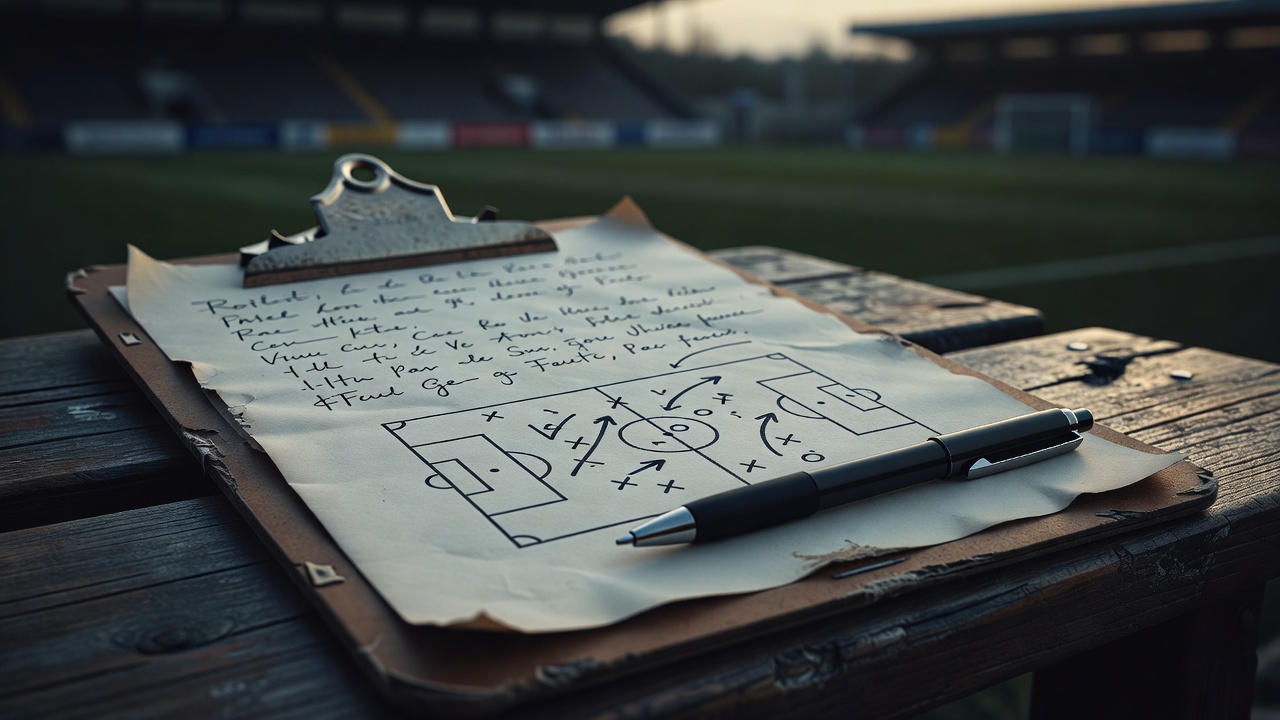
Transitions: where matches turn
Football has four phases, not two: in possession, out of possession, and the two transitions between them. Transitions are brief and chaotic, and many goals begin within them. When the ball changes hands, ask two questions. Did the team that lost it react together, either counterpressing or retreating as a unit? And did the team that won it look forward first, or secure possession? Patterns emerge quickly. Some teams counterpress for a few seconds and then drop; others always foul to stop the break. Neither approach is wrong, but both are choices.
Using numbers without being used by them
Expected goals, usually shortened to xG, estimates the probability that a shot becomes a goal based on factors such as distance, angle and the type of chance, drawn from large historical datasets. It is a valuable corrective to scorelines: a side that loses 1–0 while creating far better chances has not necessarily played badly. But xG measures shots, not the movements that produced them, and a single total hides a great deal. Treat every statistic as a question. If a number surprises you, rewind and find the moments that created it.
Writing it up
The final step is the most neglected: write a short account while the match is fresh. Three paragraphs are enough. The first describes each team's plan. The second describes the key moment when one plan beat the other. The third asks what the losing coach might change next time. Done every week, this habit will improve your eye faster than any amount of passive viewing. It is also, we think, the most enjoyable way to watch football.
Questions about any of the four essays? Our reader questions page collects the most common ones.